


Bluetooth Cardioverter Defribillator
Written by Dominique Garcia
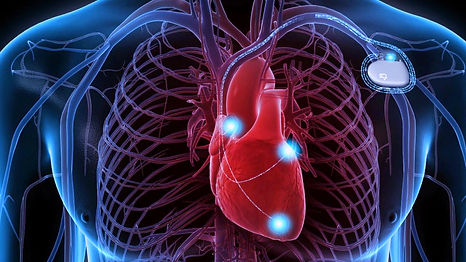
In February 2020, biotechnology company Abbott secured FDA approval for its new generation of medical devices.
Abbott’s Gallant line comprises highly technologized pacemakers and defibrillator implants, reshaping modern standards for the medical device industry. The Gallant line features Bluetooth technology, linking implantable cardioverter defibrillators to a personal smartphone application that monitors and identifies potential life-threatening heart arrhythmias in patients.
Cardioverter defibrillators are inserted like permanent pacemakers and are designed to detect life-threatening, rapid heartbeats. If the device detects an abnormal heartbeat, it will administer an electric shock to the heart which then changes the rhythm back to normal. This process is called defibrillation.
The cohesion of medical devices to smartphone applications statistically improves patient outcomes, by enabling patients to actively participate in monitoring episodes and allowing clinicians to access event history remotely using computerized data.
Avi Fischer, Abbott’s chief medical officer of cardiac rhythm business, confirms that the impact of remote monitoring has been repeatedly proven to produce improved patient outcomes, reduce the burdens on our healthcare system, and reinforces better engagement between patients, caregivers, and doctors.
References -
Hale, Conor. “FDA Approves Abbott's Bluetooth-Connected Pacemaker, Defibrillator Implants.” FierceBiotech, MedTech, 6 July 2020, https://www.fiercebiotech.com/medtech/fda-approves-abbott-s-bluetooth-connected-pacemaker-defibrillator-implants.
“Implantable Cardioverter-Defibrillator: Medlineplus Medical Encyclopedia.” MedlinePlus, U.S. National Library of Medicine, 11 Jan. 2022, https://medlineplus.gov/ency/article/007370.htm.
Medical Wearables - How They Are Improving Elderly Care

Written by Dominique Garcia
Going to a doctor's appointment can be an emotionally draining and physically burdening experience for elderly patients. Driving may not be an option due to age, and decreased physical mobility may erode confidence with being in public spaces.
Medical wearables offer an ideal solution for elderly patients, giving them the ability to access care remotely rather than face the challenges of travel. Medical wearables introduce transformative opportunities for the diagnosis, monitoring, and delivery of personalized patient care.
Originally, mainstream wearables familiar to consumers were not designed with the medical expertise precise enough for clinical application of data. Traditional consumer devices often collected non-medical feedback for the user such as sleep schedules, step counts, or calorie tracking. While these components are undeniably important to personal health, they did not supplement clinical goals at a sufficient capacity.
With evolving trends in the medical device market place, however, device manufacturers have begun to close these gaps and develop technologies that can be used in clinical settings - “For example, Apple has received FDA clearance for the ECG function on the Apple Watch” (MedDeviceOnline).
Medical device wearables have evolved to have a high bar for accuracy in measuring disease-specific biomarkers and collecting information data on factors that affect disease management. New wearables have the power to measure key diagnostic measures such as blood pressure, heart rate, weight, physical activity, and sleep. Not only do these wearables have advanced measuring capacities, but are even being synchronized with companion mobile applications so that there is a record of all activity.
With the advancing technologies in wearable devices, the unique challenges of elderly care are being regarded. Older patients may no longer have to travel to check up appointments, using telemedicine and wearables as an alternative.
References -
The Medical Futurist. “The Greatest Technological Developments for the Elderly in Healthcare.” The Medical Futurist, 6 Dec. 2021, https://medicalfuturist.com/the-greatest-technological-developments-for-the-elderly/.
Hung, Amy, et al. “Advancing Patient Care with Wearable Medical Devices.” Advancing Patient Care With Wearable Medical Devices, Med Device Online, 20 Dec. 2021, https://www.meddeviceonline.com/doc/advancing-patient-care-with-wearable-medical-devices-0001.
ProAir
Digihaler

Written by Dominique Garcia
According to studies conducted by the Centers for Disease Control and Prevention (CDC), data illustrates that over 24 million US children and adults are currently living with asthma and 13 million adult cases of chronic bronchitis and emphysema.
Chronic lower respiratory diseases including asthma have grown extremely prevalent in the United States, resulting in 106,201 potentially preventable deaths in 2017.
Teva’s ProAir Digihaler is the first ever digital albuterol inhaler with an electronic module. Paired with its companion smartphone application, ProAir Digihaler introduces a groundbreaking advancement in respiratory care bringing a new digital health tool to patients with asthma and chronic obstructive pulmonary disease in the United States.
Each inhaler has an individualized QR code that can be synchronized with the mobile app that records and stores data on inhaler use. Teva’s ProAir Digihaler is designed with built-in sensors that monitor the use of the inhaler and measure respiratory flow. The sensors transmit detected data from the inhaler to the patient’s smartphone application through a wireless bluetooth feature so that patients can assess their personal data or share it with a provider for case management.
The ProAir Digihaler’s technological capabilities set new standards for the treatment and management of chronic respiratory diseases, as patients are now able to digitally record and measure their inhaler use for the first time ever. The companion application to ProAir provides personalized features for patients, such as daily/weekly reports of inhaler use, inspiratory (inhaling) flow rates, and local environment notifications that may trigger a need for use - such as pollen count forecasts.
The app will notify patients if they need to improve their inhalation techniques, or if they use the medication more than directed - which could cause a rapid heart rate or other serious side effects.
Executive Vice President of North America Commercial at Teva Pharmaceuticals, Brendan O’Grady, states “We are especially proud to provide our first Digihaler® product at a time when digital health technology is growing and continues to transform patient care, since it will enable patients to electronically record and monitor their rescue inhaler use.”
References -
Kirsh, Danielle. “The 18 Most Innovative Medical Devices of 2020 .” Medical Design and Outsourcing, 25 Mar. 2021, https://www.medicaldesignandoutsourcing.com/the-18-most-innovative-medical-devices-of-2020/19/.
Muoio, Dave. “Teva Pharmaceuticals Releases Its Prescription ProAir Digihaler in the US.” MobiHealthNews, 16 July 2020, https://www.mobihealthnews.com/news/teva-pharmaceuticals-releases-its-prescription-proair-digihaler-us.
Park, Brian. “ProAir Digihaler, a Rescue Inhaler with Built-in Sensors, Now Available.” MPR, Haymarket Medical Network, 25 Nov. 2020, https://www.empr.com/home/news/proair-digihaler-inhalation-powder-available-for-over-4-years/.